To further deepen patriotic education and carry forward the revolutionary heritage, the Joint Party Branch of Faculty and Students for High-Efficiency Water-Saving Irrigation Technology at the Fluid Center of Jiangsu University, together with the Qiyi Village New Era Civilization Practice Station and the Qiyi Community Sunshine Public Welfare Service Center, held a red-themed educational activity titled “Retracing the Anti-Japanese War Route and Paying Tribute to Heroic Spirits” on January 11. More than 50 Party members, children and teenagers, as well as village and community staff members, participated in the event.
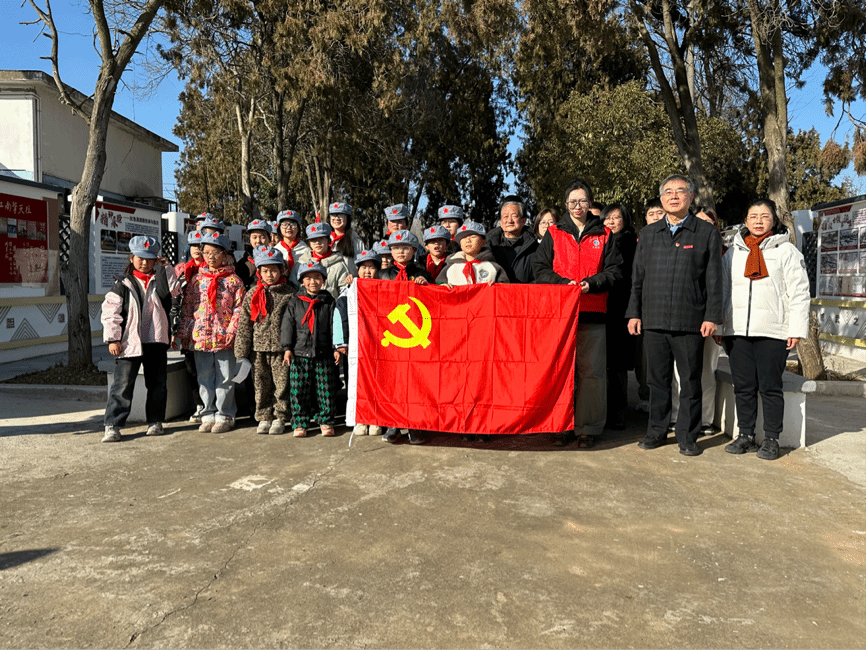
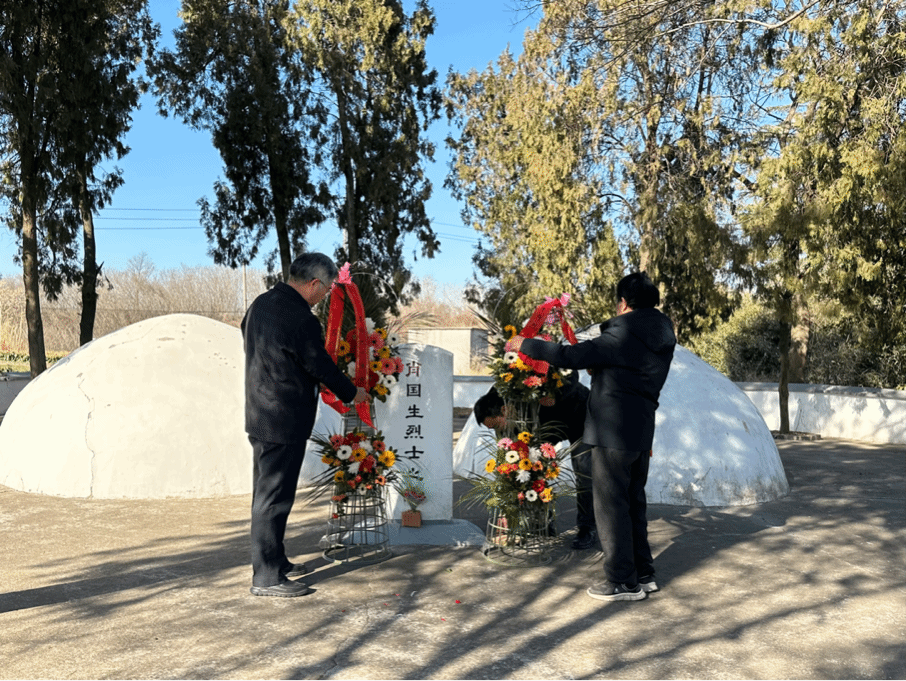
At the beginning of the activity, all participants walked to the cemetery of anti-Japanese martyrs including Xiao Guosheng to pay tribute to the national heroes. Yuan Shouqi, former Secretary of the CPC Jiangsu University Committee and Director of the National Research Center of Pumps, and He Changyi, Director of the Qiyi Village Working Committee for the Care of the Next Generation, presented flower baskets on behalf of their respective organizations.
Zheng Longbao, the second-generation guardian of the martyrs’ cemetery, gave an emotional account of wartime stories and the life, growth and combat experience of martyr Xiao Guosheng. He also pointed out the battle route between the New Fourth Army and Japanese invaders, as well as the site where the martyrs laid down their lives, enabling the children to gain a deeper understanding of the history of the War of Resistance Against Japanese Aggression.
At the final stop, participants visited the Memorial Hall of the Four-County Anti-Enemy Association of the New Fourth Army in Baoyan. Guided by the museum docent, they learned about the New Fourth Army’s resistance efforts in southern Jiangsu and the important role played by the Four-County Anti-Enemy Association through historical artifacts, images, written materials and reconstructed scenes.
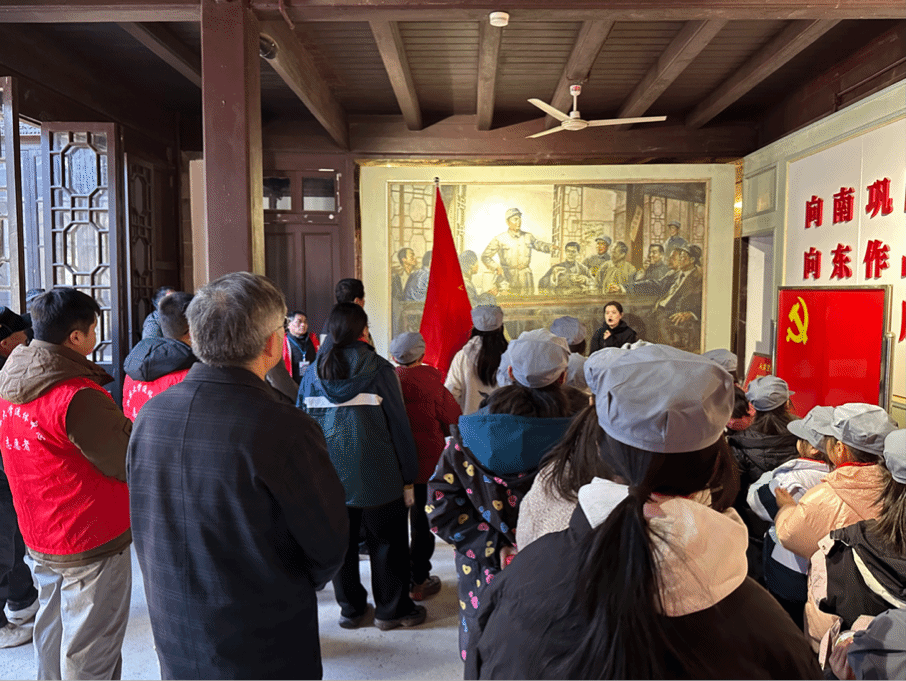
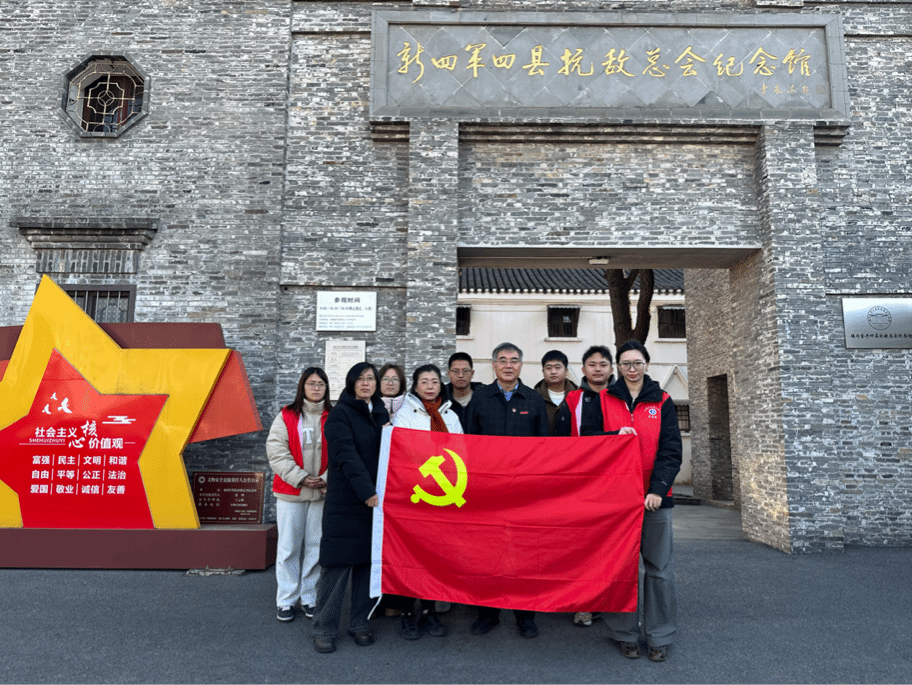
Through immersive, practice-based learning, the activity brought the revolutionary heritage to life through walking, listening and reflection. It effectively strengthened participants’ national pride and sense of historical responsibility. The event also promoted collaboration between the university Party branch, local village and community organizations, and public welfare groups, integrating Party-building resources with social resources. It laid a solid practical foundation for cultivating a new generation capable of shouldering the mission of national rejuvenation and for promoting the great spirit of the War of Resistance Against Japanese Aggression and Patriotism.


